
Invited Speakers
 Assoc. Prof. Xiangyun Tang
Minzu University of China, China
Xiangyun Tang is an Associate Professor at the School of Information Engineering, Minzu University of China. Dr. Tang has been recognized as a high-level talent by the university and selected for the Beijing Young Talent Support Program. Research interests include artificial intelligence security and privacy, privacy-preserving computation, federated learning, and federated unlearning. Dr. Tang received a Ph.D. in Cyberspace Security from Beijing Institute of Technology in 2022 and previously worked in algorithm research and development at Tencent's WeChat Business Group. As principal investigator, Dr. Tang has led projects supported by the General Program and Young Scientists Fund of the National Natural Science Foundation of China, subprojects under National Science and Technology Major Projects, and major and key projects at the provincial and ministerial levels. Dr. Tang has published more than 50 papers, including articles in leading journals such as IEEE Transactions on Information Forensics and Security (TIFS), IEEE Transactions on Dependable and Secure Computing (TDSC), and IEEE Journal on Selected Areas in Communications (JSAC), and has filed or been granted 19 invention patents. These research contributions have received eight awards, including Best Paper Awards and science and technology awards from academic societies. Dr. Tang currently serves on the editorial boards of IEEE TIFS and IEEE TDSC.
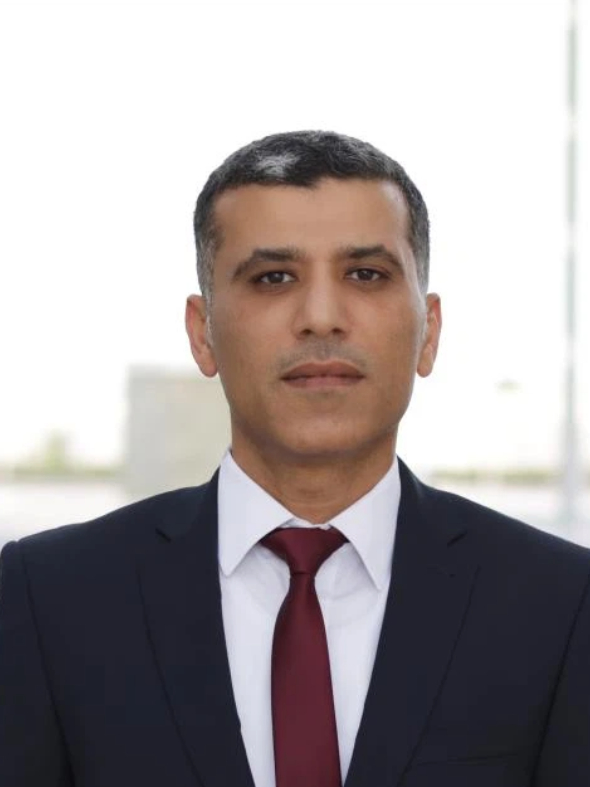 Assoc. Prof. Hasan Kadhem
American University of Bahrain, Kingdom of Bahrain
Hasan
Kadhem is an Associate Professor of Computer Science at the
American University of Bahrain. His research focuses on
Artificial Intelligence, Machine Learning, Large Language
Models (LLMs), cybersecurity, and data-driven systems. He
has extensive experience in applied AI, including the
development and evaluation of intelligent systems,
predictive analytics, and AI-powered applications for
industry and education.
Dr. Kadhem has published numerous research papers in
international journals and conferences and has served as a
reviewer, technical committee member, and session chair for
several international conferences in AI, cybersecurity, and
computing technologies. He is also actively involved in
interdisciplinary projects with industry partners, focusing
on the practical deployment of machine learning models, data
analytics, and intelligent monitoring systems.
In addition to his research activities, Dr. Kadhem
contributes to curriculum development, accreditation
initiatives, and executive education programs, particularly
in the areas of AI and cybersecurity. His recent work
includes evaluating advanced capabilities of modern large
language models and exploring the integration of generative
AI in higher education and professional training.
Copyright © 2026 2nd International Conference on Artificial Intelligence Security and Governance (ICAISG)